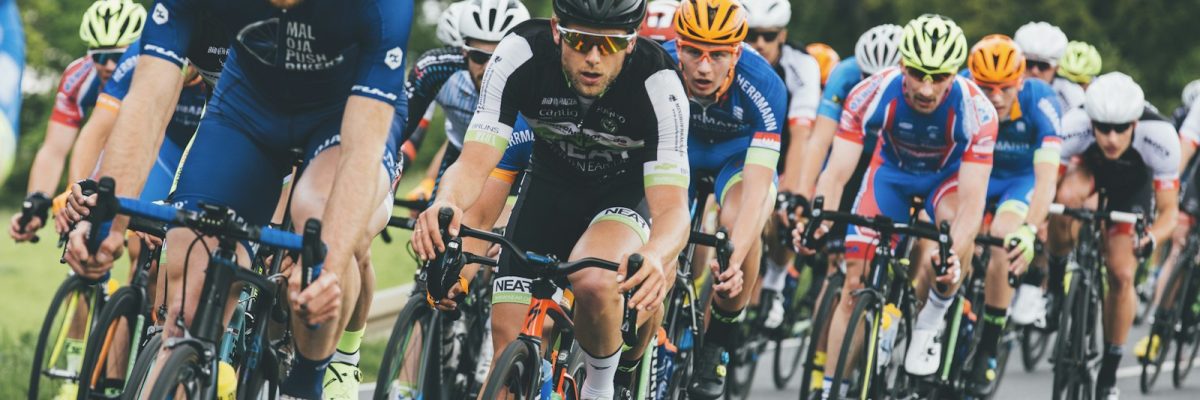
You turn on the Tour de France and see a peloton of 170 riders streaming through French countryside, a man in a yellow jersey at the front, and a commentator excitedly discussing “the GC battle.” None of it makes obvious sense if no one has explained the underlying structure. A stage race is different from almost every other sport: the winner isn’t the person who wins the most individual days — it’s the person who accumulates the lowest total time across three weeks. Every flat sprint, every mountain summit, every time trial contributes to a single running clock. Once you understand that, the tactics, the jerseys, and the drama all click into place.
- A stage race winner is decided by lowest cumulative time across all stages — not by most stage wins
- The three Grand Tours — Tour de France, Giro d’Italia, Vuelta a España — each run for 21 stages over three weeks
- The 2025 Tour de France covered 3,320 km with 23 teams of 8 riders (184 riders total)
- Four simultaneous competitions run during each Grand Tour: overall time, points, mountains, and best young rider
- A rider can win the Tour de France without winning a single stage — consistent top finishes across every stage is enough
How a Stage Race Works: Cumulative Time, Not Most Stage Wins
The concept is straightforward once stated: every rider’s elapsed time for each stage is recorded, and all those stage times are added together. After 21 stages, whoever has the smallest total number — hours, minutes, and seconds accumulated — wins the race. Simple in principle; staggeringly complex in practice.
What happens each day and how times add up
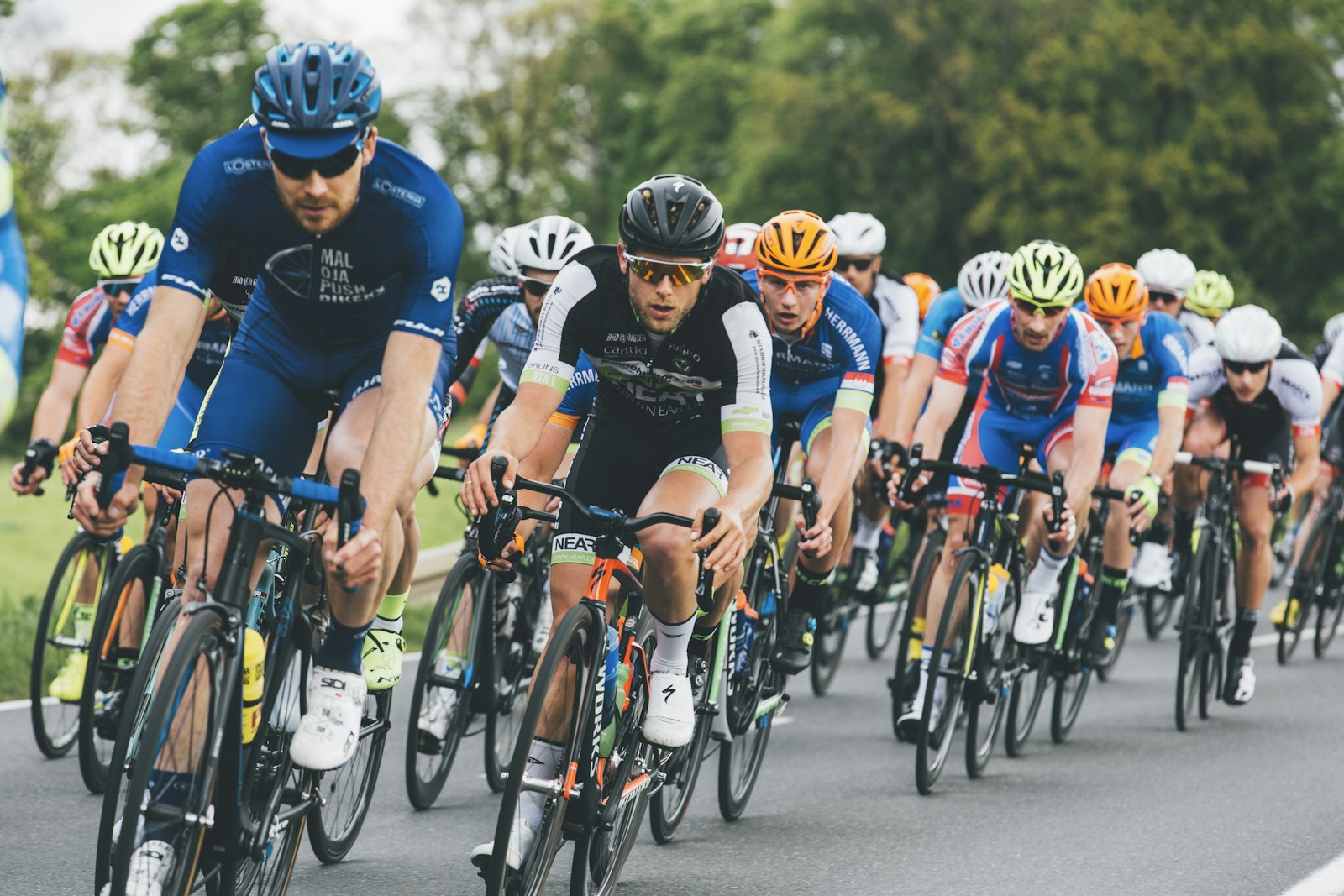
Each stage starts with all riders at the same start line and a clock that begins running when the neutral zone ends and real racing begins. Every rider’s time is recorded when they cross the finish line. In a mass-start stage where the entire peloton arrives together in a sprint finish, all riders in that group receive the same time — the clock records the front of the bunch, and everyone in the group is credited with the same finish time regardless of where exactly within the group they crossed.
After each stage, every rider’s time for that day is added to their accumulated total from previous stages. The rider whose running total is lowest wears the race leader’s jersey the next day — yellow in the Tour de France, pink in the Giro d’Italia, red in the Vuelta a España. That jersey is the most visible symbol of the general classification, abbreviated to GC, and chasing or defending it is the central drama of every Grand Tour.
The leader’s jersey: yellow, pink, red
The Tour de France’s iconic yellow jersey — the maillot jaune — was first worn on 19 July 1919 by Eugène Christophe, its colour matching the yellow pages of L’Auto newspaper, which organised the early race. The Giro d’Italia’s pink jersey (maglia rosa) reflects the pink pages of La Gazzetta dello Sport, which has sponsored the race since its 1909 founding. The Vuelta a España’s red jersey (maillot rojo) was introduced in 2010, replacing earlier gold and orange versions.
Each day, the jersey transfers to whoever leads the GC standings. A rider might wear it for a single day in the first week before being overtaken in the mountains. Or a dominant rider might take it early and never relinquish it. As detailed in the Tour de France GC explainer, the yellow jersey works on accumulated seconds — and small time differences from bonification seconds can shift the standings even on days without dramatic attacks.
Why you can win the Tour without winning a single stage
This surprises many new fans. The GC tracks only total time — not stage victories. A rider who finishes second or third on every mountain stage, never quite winning any single day but consistently limiting losses and gaining tiny advantages, can accumulate a lower total than a rider who wins two stages dramatically but loses significant time on other days. Chris Froome won multiple Tours de France using precisely this consistent, defensive approach — limiting losses, protecting time gaps, rarely attacking to win stages outright.
The Three Types of Stages and What Makes Them Different
Grand Tours deliberately include three fundamentally different stage types, each testing a different set of physical abilities and creating different tactical dynamics.
Flat stages: sprint finishes and bunch dynamics
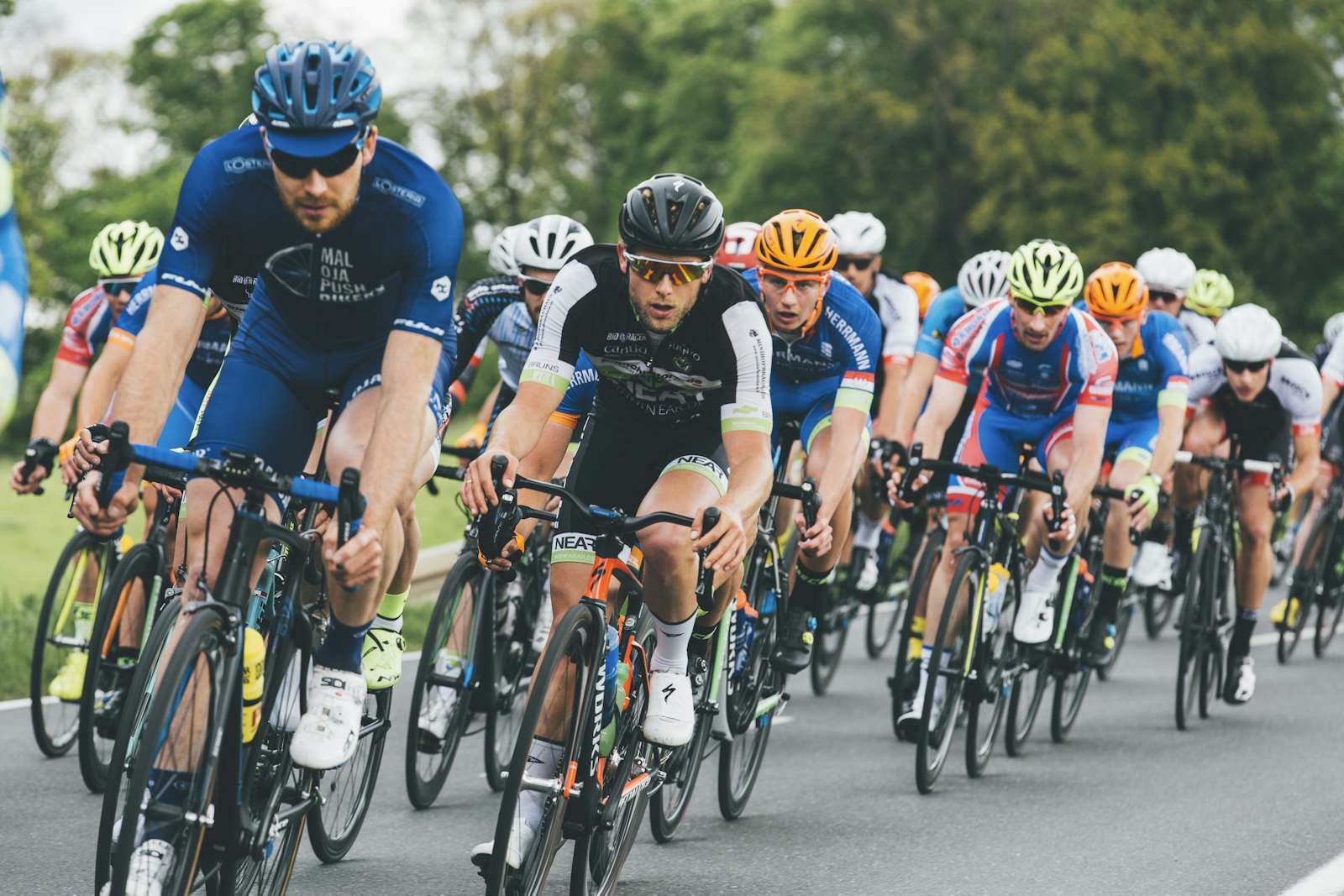
On a flat stage, the entire peloton typically stays together until the final kilometres. No climb separates climbers from sprinters; the draft keeps everyone in the race. The final 3–5 km erupts into a chaotic, high-speed sprint where lead-out domestiques position their sprinters at the front of the peloton at 60–70 km/h before the sprinter launches their sprint in the final 200 metres.
For GC contenders, flat stages are usually about survival — staying in the peloton, avoiding crashes, and not losing time. The risk of crashing in the frantic bunch sprint is real, and losing minutes to a crash in week one can end a GC campaign before it begins. Most top GC riders don’t contest the sprint but roll across the line safely in the group.
Mountain stages: where Grand Tours are won and lost
Mountain stages are where the race’s overall winner is most often decided. On the climbs, the peloton shatters. Riders who cannot maintain the pace of the best climbers are dropped, losing seconds and then minutes as the gradient works against them. The GC contenders — the best climbers — battle each other at the front, attacking and counter-attacking to extract whatever time gaps they can.
A typical mountain stage might include two or three categorised climbs before a summit finish — a stage that ends at the top of a major ascent. These summit finishes concentrate the GC battle into a 20–40 minute climb where every second matters. The mountains classification (polka dot jersey) adds a parallel competition: points are awarded at each summit to the first riders over, with harder climbs (HC and Cat 1) offering the most points.
The 2025 Tour de France featured six mountain stages with five summit finishes — including Hautacam, Mont Ventoux, and Col de la Loze. These stages were raced over 3,320 km total with 51,550 metres of total climbing, according to the 2025 Tour de France record.
Time trials: the race of truth
Unlike all other stages, a time trial stage is raced entirely alone. Riders start at intervals of 1–2 minutes, race against the clock without drafting, and the fastest individual time wins the stage. No team tactics, no positioning in the peloton, no shelter from the wind. The Tour calls it “the race of truth” because the final time reflects nothing but the individual’s power and aerodynamic efficiency.
Time trials can shift the GC standings dramatically. In the 2023 Tour de France, Jonas Vingegaard beat Tadej Pogačar by 1 minute 38 seconds in a 22.4 km time trial — a margin that ended the race’s GC competition five stages from the finish. Time trial results award no bonification seconds; every second of advantage is earned purely from speed on the road.
Beyond the Yellow Jersey: The Other Competitions Running Simultaneously
While the GC battle commands the most attention, three other competitions run simultaneously throughout a Grand Tour, each with its own jersey and its own dedicated contenders. Understanding them turns a stage race from a single story into four interwoven competitions.
Green jersey: the points classification
The green jersey (maillot vert) is awarded to the rider who accumulates the most points across stage finishes and intermediate sprints. Unlike the GC, which is purely about time, the points classification runs on a separate tally where flat stages are worth up to 50 points for first place (more than double a mountain stage). It rewards consistency, aggression, and sprint ability rather than the pure climbing dominance that GC racing demands. Peter Sagan won it a record 7 consecutive times from 2012 to 2019.
Polka dot jersey: the King of the Mountains
The polka dot jersey (maillot à pois rouges) goes to the rider who accumulates the most mountain classification points — earned by being among the first riders over each categorised climb. Hors catégorie climbs (the hardest, like Alpe d’Huez or Mont Ventoux) award 20 points to first place; summit finishes double that to 40. Specialist climbers chase it through breakaways, but in recent years GC-dominant riders like Pogačar have collected it as a byproduct of winning summit finish stages.
White jersey: best young rider
The white jersey (maillot blanc) goes to the best-placed rider aged 25 or under in the general classification. It is effectively a second GC competition running within the main one — the same cumulative time rules apply, but restricted to younger riders. Tadej Pogačar won it for four consecutive years from 2020 to 2023 before ageing out of eligibility. The white jersey often signals the next generation of GC talent, and watching its wearer in relation to established champions is one of the most interesting narratives across three weeks of racing.
The sheer intricacy of a Grand Tour is the reason it captivates for 21 days in a way that almost no other sporting event can. Four jersey competitions. Three stage types. Two hundred riders whose individual strengths, weaknesses, and team allegiances make every day’s racing genuinely unpredictable. Understanding the structure doesn’t reduce the drama — it multiplies it, because you can finally see why a rider in eighth position launches a seemingly pointless attack, or why the yellow jersey sits last in the peloton for three stages and nobody panics. Every rider on the road has a reason for every movement. Once you know the framework, the race reveals itself.
Frequently Asked Questions
What is a stage race in cycling?
A stage race is a multi-day cycling event where each day’s race (a “stage”) is timed separately, but all stage times are added together. The rider with the lowest cumulative total time after all stages wins the overall classification. The Tour de France, Giro d’Italia, and Vuelta a España are the three Grand Tours — the most prestigious stage races, each running for 21 stages over three weeks.
How does the yellow jersey work in the Tour de France?
The yellow jersey is worn by the rider with the lowest accumulated race time at any point during the Tour de France. After each stage, all stage times are added to the running total. Whoever has the smallest total wears yellow the next day. Bonus seconds (10-6-4 for top three at most stage finishes) are subtracted from totals, not added — making them time reductions.
Can you win the Tour de France without winning a single stage?
Yes. The GC tracks cumulative time only, not stage wins. A rider who consistently finishes second or third on mountain stages and time trials — never quite winning any individual day but always limiting losses — can accumulate a lower total than a rival who wins stages dramatically but loses time on other days. Chris Froome won multiple Tours with exactly this consistent, defensive approach.
How many stages are in the Tour de France?
The Tour de France consists of 21 stages raced over approximately 23 days (21 race days plus 2 rest days), covering roughly 3,000–3,500 km in total. The 2025 Tour covered 3,320 km with 23 teams of 8 riders each (184 riders in total). The stages include a mix of flat, hilly, mountain, and time trial stages.
What are all the jerseys in the Tour de France?
The Tour de France runs four simultaneous competitions: the yellow jersey for the overall GC leader (lowest cumulative time), the green jersey for the points classification leader, the polka dot jersey for the King of the Mountains (most climbing points), and the white jersey for the best young rider aged 25 or under in the GC standings. Each jersey has its own points or time competition running in parallel throughout all 21 stages.