
The yellow jersey goes to the fastest rider. The green jersey goes to the most opportunistic one — the rider who accumulates the most points across 21 stages of sprints, intermediate dashes, and tactical positioning. Unlike the overall classification, which is decided purely by time, the green jersey competition runs on a separate points currency that rewards aggression and consistency rather than pure climbing or time-trialling ability. Understanding how those points are awarded tells you exactly why certain stages matter more than others — and why you’ll sometimes see a GC leader unexpectedly launch a sprint for what looks like second place.
- Flat stages are worth the most — 50 points for first place, more than double a mountain stage win
- Each non-ITT stage includes an intermediate sprint awarding up to 20 points mid-stage, separate from the finish-line points
- The top 15 riders at each finish and each intermediate sprint score points — not just the top 3
- Peter Sagan holds the record with 7 green jerseys (2012–2019); in 2019 he scored over 500 points
- Jonathan Milan won the 2025 green jersey; Biniam Girmay won in 2024 — the first African winner in the competition’s history
How the Points System Works: Different Stages, Different Values
The points classification operates in parallel with the general classification throughout the Tour. At every stage finish and every intermediate sprint, points are distributed to the highest-placed finishers — and those points accumulate over three weeks into the green jersey competition total. The critical design choice is that not all stages are worth the same: the Tour deliberately assigns far more points to flat stages than to mountain stages, ensuring that specialist sprinters — who are disadvantaged on climbs — have a genuine route to winning the competition.
The points table: flat vs. hilly vs. mountain vs. ITT
According to the Tour de France points classification breakdown, the current points structure by stage type is:
| Position | Flat Stage | Hilly Stage | Mountain Stage | Time Trial |
|---|---|---|---|---|
| 1st | 50 | 30 | 20 | 20 |
| 2nd | 30 | 25 | 17 | 17 |
| 3rd | 20 | 22 | 15 | 15 |
| 4th | 18 | 19 | 13 | 13 |
| 5th | 16 | 17 | 11 | 11 |
| 10th | 6 | 7 | 4 | 4 |
| 15th | 2 | 2 | 1 | 1 |
The gap between a flat stage win (50 points) and a mountain stage win (20 points) is stark. A sprinter who wins two flat stages in the first week banks 100 points — the same as winning five mountain stages outright. This is not accidental. It makes the competition genuinely contested between specialist sprinters and all-rounders rather than defaulting to whoever survives the Alps and Pyrenees best.
Intermediate sprints: the mid-stage points opportunity
On every stage except individual time trials, the route includes one designated intermediate sprint — a specific point on the course, usually in a town centre or at a road marker, flagged in advance. When riders reach it, the first 15 across the line earn points. The intermediate sprint awards a maximum of 20 points to first place, with the top 15 scoring down to 1 point for fifteenth.
These mid-stage sprints are tactically distinct from finish-line sprints. The full peloton rarely contests them — a sprint effort in the middle of a 200 km stage burns energy needed for later. Instead, a small group of points-hunters will accelerate away from the peloton, sprint hard for 200–400 metres, then slot back into the group. The intermediate sprint also plays a role in the bonification seconds competition in races where mid-stage time bonuses are available, though the Tour de France removed those for 2025 while keeping the points sprints intact.
Why flat stages are worth so many more points than mountain stages
On a mountain stage, the peloton splinters on the climbs. A sprinter who gets dropped 80 km from the finish will cross the line minutes after the stage winner — completely out of contention for points regardless of their sprint ability. Giving mountain stages fewer points compensates for this structural disadvantage.
Flat stages, by contrast, keep the peloton together until the final kilometres. Every sprinter arrives at the finish line in the same group and competes on equal footing with GC riders and breakaway hunters. Awarding 50 points for a flat stage win recognises that the points competition is truly wide open on those days — and encourages the all-out bunch sprint that makes flat stages spectacular for spectators.
How Many Points It Takes to Win the Green Jersey
The total points available across a 21-stage Tour is substantial — every stage offers at least 50+ points just for the finish, and the intermediate sprints add a parallel points stream. In practice, winning the green jersey typically requires 400–450 points, though exceptional editions have gone higher.
Sagan’s record and what 500+ points looks like
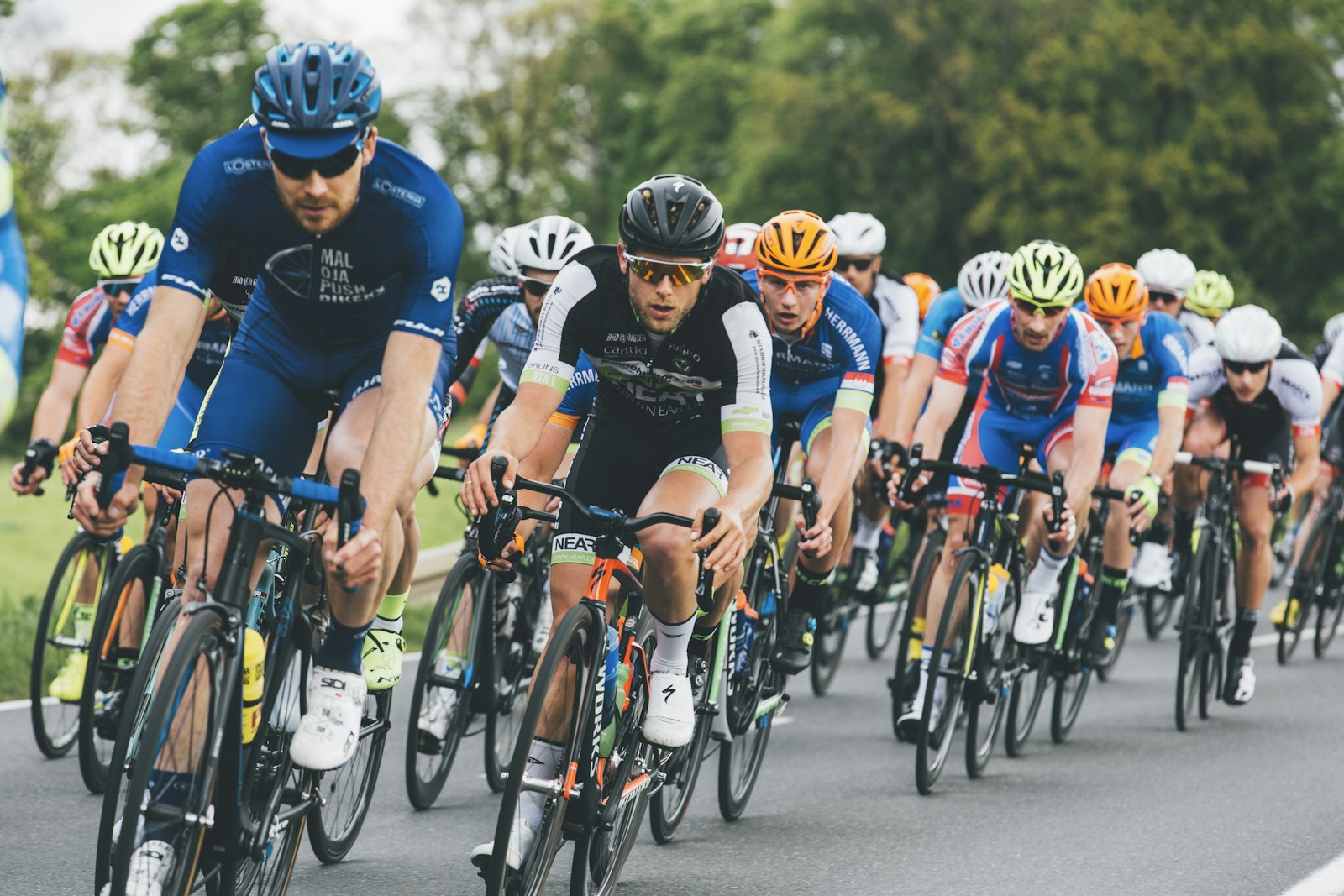
Peter Sagan — the Slovak sprinter-puncher who dominated the green jersey competition throughout the 2010s — won the green jersey a record 7 times between 2012 and 2019. According to Domestique Cycling, his 2019 tally exceeded 500 points — achieved by winning flat stages outright, consistently placing in the top five on hilly and punchy stages, and systematically targeting intermediate sprints even when he wasn’t contesting the stage win.
Sagan’s approach illustrated the winning formula: volume of podium finishes combined with intermediate sprint aggression adds up faster than going all-in on a smaller number of stage wins. A rider who finishes second on seven flat stages scores 210 points — more than the total a rider would earn from winning three mountain stages.
Why consistent aggression beats protecting early leads
Unlike the yellow jersey competition — where protecting a lead often means limiting risk — the green jersey rewards continuous aggression. A green jersey leader who starts conserving energy to protect their advantage will see rivals eat away at their total through intermediate sprints and consistent finishes. The competition effectively punishes passivity: the rider who wins a big flat stage bonus early but then sits in the peloton for two weeks will be caught by a rider who accumulates 20-30 points per stage through intermediate sprints and high finishes consistently.
The Strategy Behind Winning the Green Jersey
Two distinct rider profiles can win the green jersey, and understanding both explains why the competition plays out differently in different years.
Pure sprinters vs. all-rounders: two ways to win green
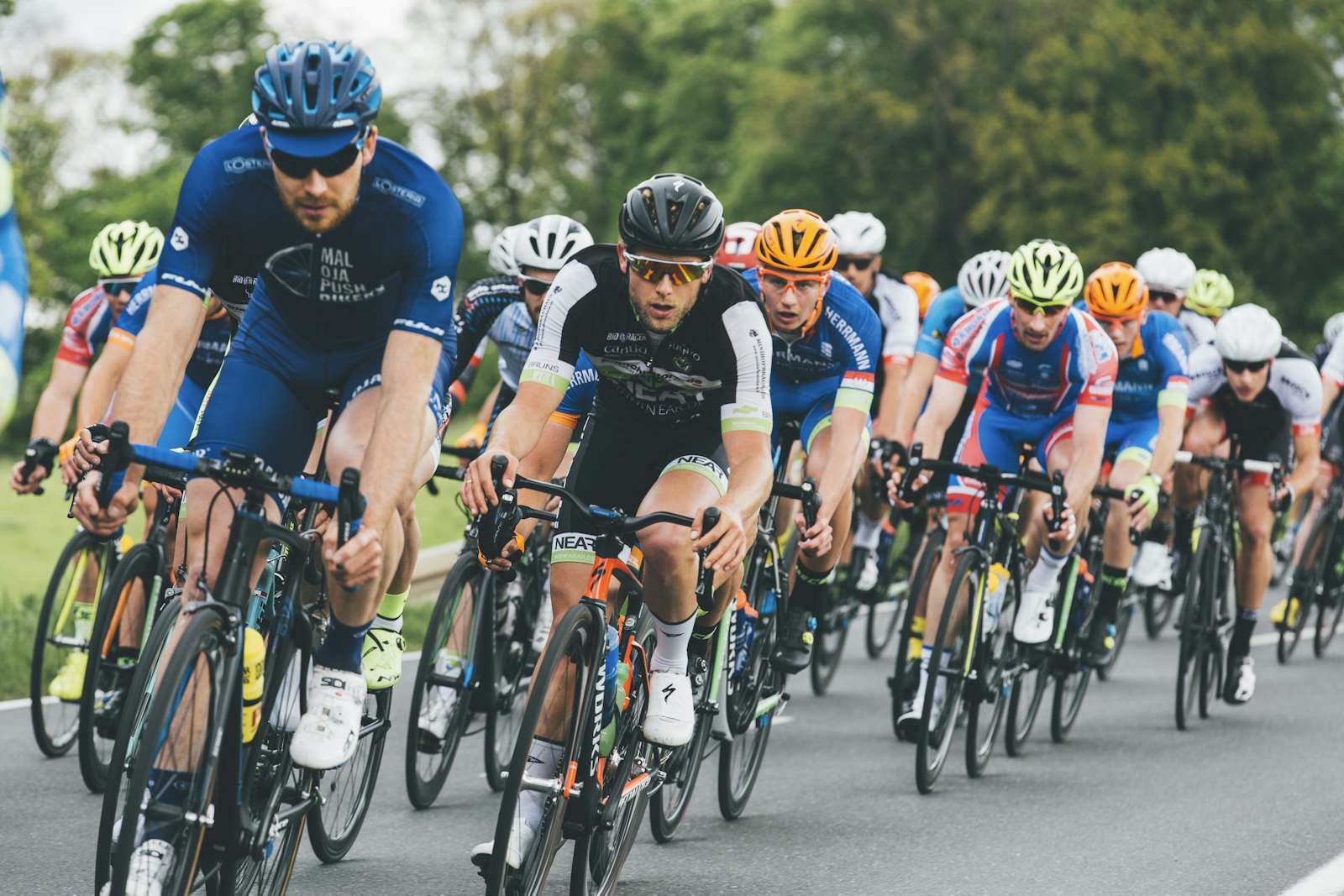
A pure sprinter — a rider with elite finishing speed who can win bunch sprints — dominates flat stages (50 points each) and typically stays competitive at intermediate sprints. Their weakness: they lose time and points on mountain stages and hilly finishes where they cannot stay with the front group. To win green, a pure sprinter needs multiple flat stage victories and consistent top-10 finishes to build a cushion before the mountains strip away their scoring opportunities.
An all-rounder or puncher — a rider strong enough to stay near the front on climbs and fast enough to contest sprint finishes on rolling terrain — approaches the competition differently. They score more modestly on flat stages but remain competitive throughout the race. They target intermediate sprints aggressively, pick up points on hilly finishes that sprinters miss, and can even score on summit finishes if strong enough. Peter Sagan was the archetypal all-rounder for this competition; his ability to finish in the top 3 on cobblestone stages, sprint stages, and hilly stages simultaneously made him virtually unbeatable for nearly a decade.
How Biniam Girmay won in 2024 and Jonathan Milan in 2025
Biniam Girmay’s 2024 victory was historic: the Eritrean rider became the first African rider to win the Tour de France green jersey, building his total through flat stage wins and intermediate sprint aggression across three weeks. Girmay, who grew up idolising Peter Sagan’s green jersey dominance, replicated Sagan’s multi-stage attack approach rather than relying on a single big win. Jonathan Milan won the competition in 2025, continuing the pattern of riders who combine genuine sprint power on flat stages with disciplined points accumulation at intermediate sprints throughout the race.
When GC leaders and green jersey contenders collide
Occasionally, the overall race leader — competing for yellow — contests the green jersey simultaneously. This happens when a GC rider has the sprint ability to pick up points on flat stages without burning the energy needed for the mountains. In the general classification battle, a rider winning a flat stage also earns bonus seconds toward the yellow jersey, while banking points toward green — a double reward that makes flat-stage sprinting genuinely tempting even for riders focused on the overall victory.
The most counterintuitive finding about the green jersey competition is how much of it is decided not at finish lines but mid-stage. An intermediate sprint awarding 20 points mid-race on a Tuesday afternoon in week one carries the same weight as the final sprint result of some stages. Riders who treat those 30-second intermediate sprint surges as trivial are systematically giving away the competition to riders who don’t.
Frequently Asked Questions
How many points does the Tour de France green jersey winner typically need?
Winning the Tour de France green jersey typically requires 400–450 points accumulated across 21 stages. Peter Sagan’s 2019 record exceeded 500 points. Points are earned at flat stage finishes (up to 50), hilly stage finishes (up to 30), mountain stage finishes (up to 20), and intermediate sprints (up to 20), with the top 15 finishers scoring at each opportunity.
Why do flat stages have more green jersey points than mountain stages?
Flat stages award 50 points for first place versus 20 for a mountain stage because sprinters — the primary green jersey contenders — are disadvantaged on climbs. They often finish minutes behind mountain stage winners. The higher flat stage values compensate for this structural inequality, keeping the competition genuinely open to specialist sprinters throughout the Tour.
What is the intermediate sprint in the Tour de France?
The intermediate sprint is a designated point mid-stage (marked in advance) where the first 15 riders across the line score green jersey points, with a maximum of 20 for first place. These occur on every non-ITT stage. They create tactical moments mid-race as points hunters accelerate away from the peloton for a brief sprint, then rejoin the group.
Who has won the most green jerseys in Tour de France history?
Peter Sagan holds the record with 7 green jerseys, won consecutively from 2012 to 2019. His all-round ability — competitive on flat stages, punchy climbs, and intermediate sprints alike — made him nearly unbeatable for nearly a decade. Biniam Girmay won in 2024 as the first African winner; Jonathan Milan won in 2025.
Can a GC contender win the green jersey at the same time as yellow?
It is rare but possible for riders who combine sprint ability with climbing strength. Winning flat stages earns both green jersey points and GC time bonification seconds simultaneously — making flat stage victories doubly valuable. However, most GC leaders lack the pure sprint speed to consistently compete with specialist points riders over three weeks.