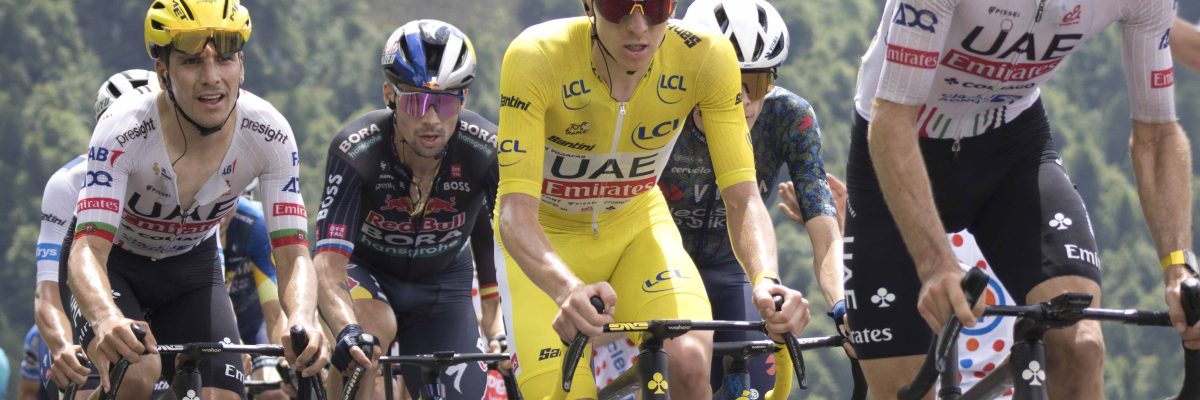
Eight seconds. That is all that separated Jonas Vingegaard and Tadej Pogačar heading into the final time trial at the 2022 Tour de France — a gap accumulated over 20 grinding stages through the Alps and Pyrenees. Every sprint finish, every mountain summit, every crash-free descent had brought the race to that razor-thin margin. The general classification, or GC, is where the Tour de France is truly decided: not by who rides fastest on a single afternoon, but by who loses the fewest seconds over three weeks and 21 stages.
- The GC ranks all riders by their total accumulated time across every stage — lowest total wins.
- Bonus seconds (10s, 6s, 4s per stage finish) subtract from a rider’s total and can flip the entire race.
- The yellow jersey has been awarded since July 19, 1919 — Eugène Christophe was the first to wear it.
- You can win the overall Tour de France without winning a single stage.
- 22 teams of 8 riders each compete, but the entire team structure is built around protecting one GC leader.
How Cumulative Time Determines the GC Leader
The general classification is deceptively simple: add up every rider’s finishing time across all 21 stages, and the rider with the lowest total wins. In practice, over 3,492 km of racing (the 2024 distance), those totals diverge by fractions of a second on flat days and by minutes on mountain passes — creating a live leaderboard that shifts constantly for three weeks.

Stage Times Add Up Over Three Weeks
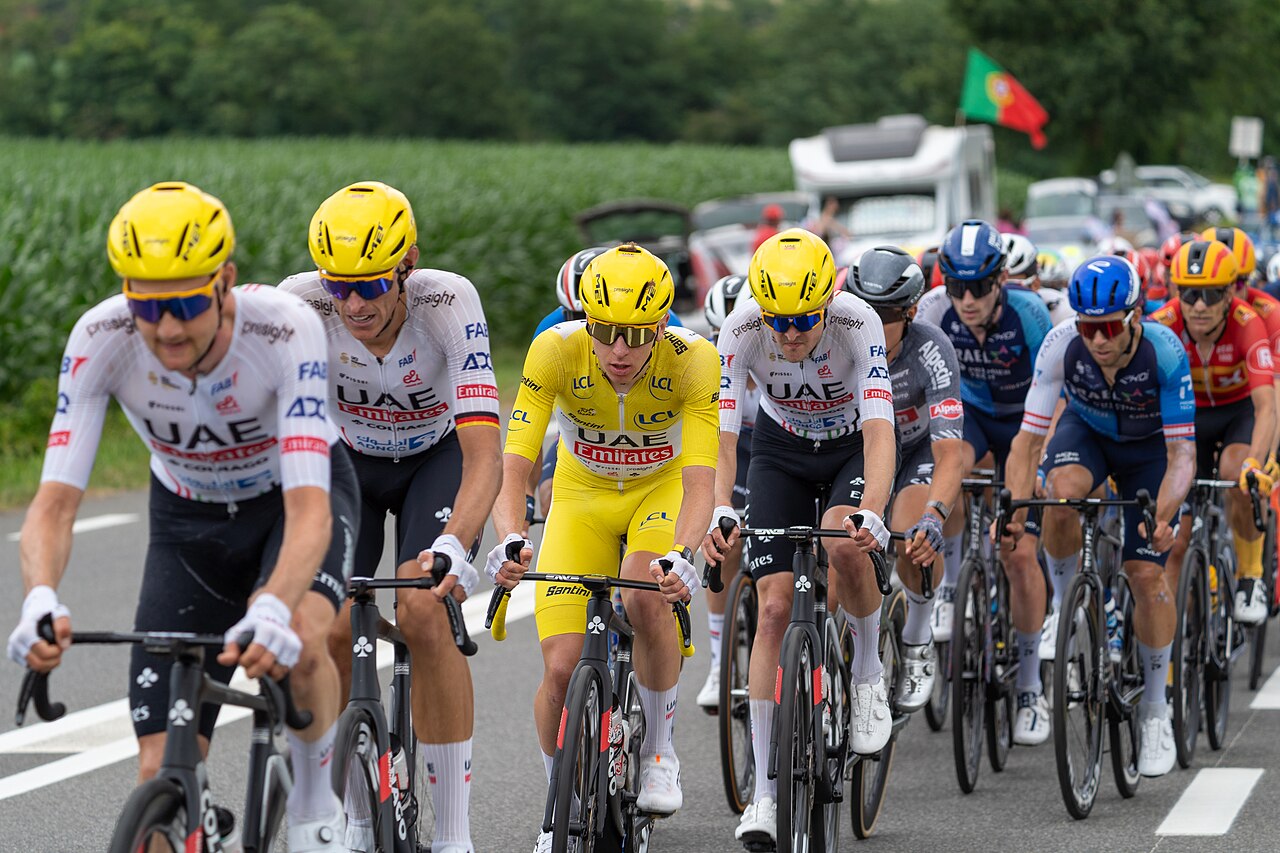
At the finish of every stage, each rider receives a time stamp. Those times are then added to their cumulative total, and the rider with the lowest aggregate sits at the top of the GC. The 176 riders who start the race — 22 teams of 8 riders each — all carry their accumulated seconds into each new day.
On flat stages ending in bunch sprints, a special rule applies: if riders cross the line within the same split second as part of the same group, they are all awarded the same time. This prevents GC riders from losing time due to the chaos of a sprint finish rather than their own performance. The time difference between GC contenders on flat stages is therefore usually zero — the race is won and lost in the mountains and time trials.
Crucially, a rider can win the Tour de France without winning a single stage. Consistency — finishing in the top group every day, never getting dropped, never losing unnecessary time — can produce a lower total than a rider who wins three stages but bleeds minutes elsewhere.
How Bonus Seconds Change the GC
Bonus seconds, known in French as bonifications, add a tactical layer on top of raw accumulated time. At the finish of every mass-start stage (not time trials), the first three riders across the line receive a time deduction from their GC total: 10 seconds for the stage winner, 6 seconds for second place, and 4 seconds for third. These are deducted, not added — rewarding aggressive racing.
In 2025, the Tour introduced intermediate mountain bonuses: the first rider to crest eight designated summit finishes earns 8 bonus seconds, with 5 and 2 seconds for second and third. These bonuses are not awarded on the two individual time trial stages (stages 5 and 13 in 2025).
The impact of bonifications is not theoretical. A rider who consistently finishes in the top three on flat stages can claw back 20–30 seconds over the course of the race purely through sprint bonuses — the equivalent of a sizeable gap on a mountain climb. When the GC is separated by only seconds going into the final week, those 10-second stage-win bonuses become critical weapons.
Time Cuts and the Gruppetto
Not every rider races for GC. Sprinters — specialists who win flat stages — face a serious problem in the high mountains: they simply cannot keep pace with the pure climbers. On the hardest Alpine and Pyrenean stages, a sprinter might finish 20–30 minutes behind the stage winner. They do not get eliminated, but they must finish within a set time percentage of the winner’s time (the “time cut”) or face disqualification from the race.
To survive, sprinters and other non-climbers band together in what is called the gruppetto (or “laughing group”) — a self-organized group that rides tempo through the mountains, sharing the effort and ensuring everyone makes the time cut. In 2025, race organizers extended the time limit by 1% on the most difficult mountain stages, giving sprinters slightly more breathing room.
The Yellow Jersey: Symbol of the GC Leader
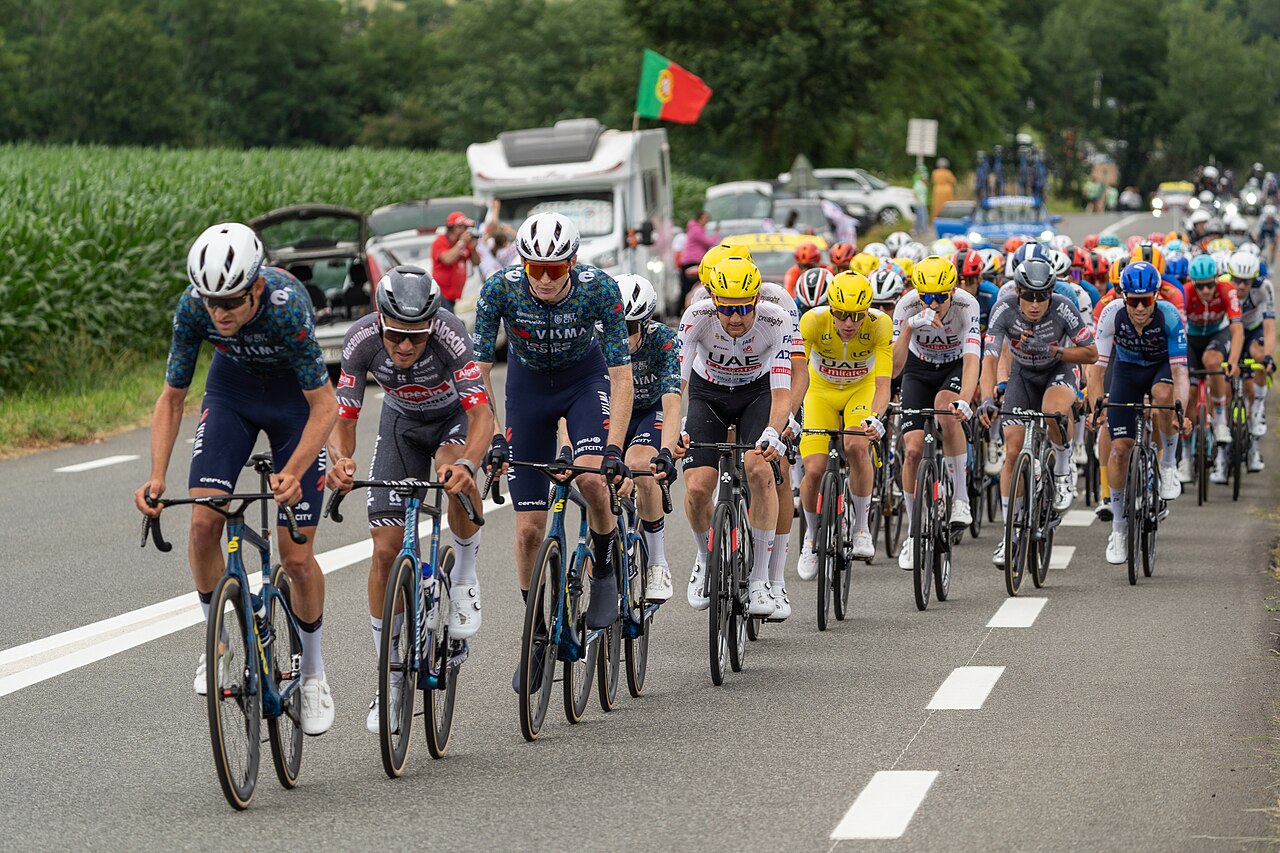
The rider leading the general classification at the end of each stage earns the right to wear the maillot jaune — the yellow jersey — the following day. It is the most recognized garment in professional cycling and one of the most iconic items of clothing in all of sport.

From Green Armband to Maillot Jaune
The general classification itself is as old as the Tour de France: the first edition in 1903 was won by Maurice Garin, France, on accumulated time. But riders did not wear a distinctive jersey to mark their GC leadership until 1919. On July 19, 1919, Eugène Christophe pulled on the first yellow jersey before the stage from Grenoble to Geneva — the first time any rider in history distinguished themselves as the GC leader through clothing.
The choice of yellow was not arbitrary. It matched the color of the newsprint used by L’Auto, the French sports newspaper that founded and organized the Tour de France. Tour director Henri Desgrange introduced the jersey, and his initials — H.D. — have appeared on the jersey’s chest as a tradition ever since. LCL (Crédit Lyonnais) has sponsored the yellow jersey since 1987, making it one of sport’s longest-running shirt sponsorships.
The Greatest Yellow Jersey Records
Over 112 editions of the Tour de France (as of 2025), a handful of riders have dominated the GC completely:
| Rider | Nationality | Tour Wins | Career Days in Yellow |
|---|---|---|---|
| Eddy Merckx | Belgium | 5 | 96 |
| Bernard Hinault | France | 5 | ~75 |
| Jacques Anquetil | France | 5 | ~52 |
| Miguel Induráin | Spain | 5 | ~60 |
| Chris Froome | Great Britain | 4 | 59 |
| Tadej Pogačar | Slovenia | 4 (2020–21, 2024) | 54+ |
| Jonas Vingegaard | Denmark | 2 (2022–23) | 42+ |
Eddy Merckx’s record of 96 career days in yellow remains untouched. He wore yellow in every Tour he entered and dominated the GC with a combination of climbing, time trialing, and stage-winning ability rarely seen before or since.
Who Wears Yellow Today
The modern GC era has been defined by two riders: Tadej Pogačar of Slovenia and Jonas Vingegaard of Denmark. Pogačar won in 2020 and 2021, Vingegaard answered with victories in 2022 and 2023, and Pogačar reclaimed the title in 2024. Their rivalry has produced some of the closest, most tactically sophisticated GC battles in Tour history — decided by seconds after thousands of kilometers of racing.
What It Takes to Win the General Classification
The GC demands a very specific physiological and tactical profile. Unlike stage hunting — where a rider can target a single day and recover the rest of the week — GC racing requires three unbroken weeks of near-maximum effort, zero major crashes, and a team entirely organized around one objective.

The Profile of a GC Contender
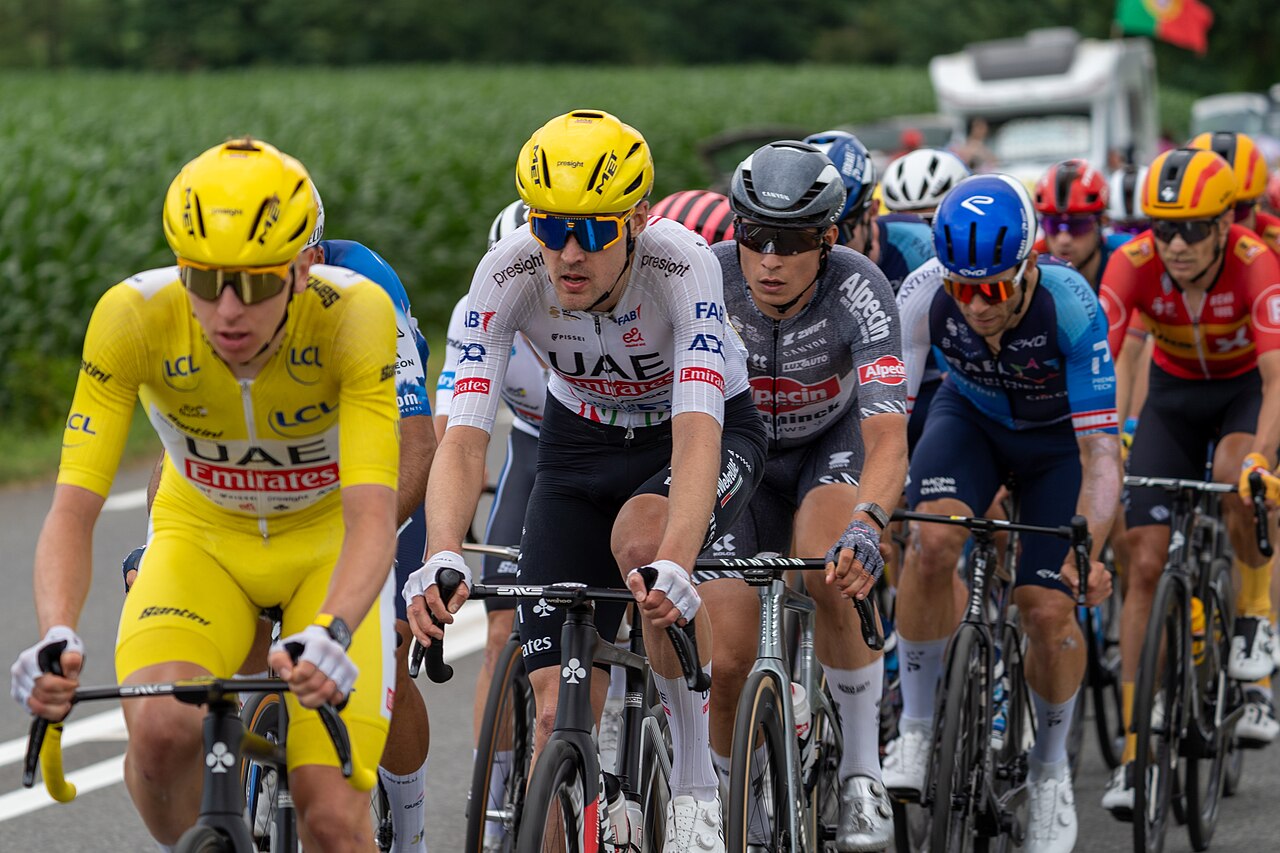
A genuine GC contender must be exceptional in two disciplines: mountain climbing and individual time trials. Mountains are where GC gaps open — the best climbers can drop rivals by minutes on a single Alpe d’Huez or Col du Tourmalet. Time trials (stages where each rider races alone against the clock) can decide the Tour by tens of seconds when the mountains have produced no decisive gap.
Sprinters are physiologically incapable of winning the GC. Their muscle composition — built for explosive 300-meter efforts — becomes a liability over 20-km climbs. A sprinter like Mark Cavendish can win 35 Tour stages yet lose 30 or more minutes to GC contenders on a single mountain stage. The power-to-weight ratio required to stay with the elite climbers on a 1-in-8 gradient for an hour eliminates an entire category of specialist riders from GC contention.
Why Consistency Beats Stage Wins
The GC rewards durability over brilliance. A rider who finishes 4th every single day accumulates a lower total time than a rider who wins three stages but cracks badly on a mountain day. This is why GC contenders are often described as “calculating” or “defensive” — they are managing a three-week time trial, not chasing daily glory.
The math is unforgiving. One bad day — a crash, a stomach illness, an ill-timed mechanical — can end a GC campaign entirely. Chris Froome built four Tour victories largely on this principle: impeccable consistency, minimal risk-taking, and protecting his lead rather than extending it. The stage winner gets a trophy; the GC winner gets everything.
Team Tactics Around the GC Leader
The 22 teams of 8 riders each are structured almost entirely around the needs of the GC leader. The other seven riders on a GC team are domestiques — servants whose entire race consists of supporting one person. On mountain stages, domestiques pace the GC leader up the climb, then “blow up” and drift back once their job is done. On flat stages, they form a protective echelon around the leader, shielding them from wind and crashes.
Domestiques also perform logistics: riding back to the team car to collect water bottles, chasing down dangerous breakaways, and — in the event of a crash — waiting with the fallen leader and pacing them back to the peloton. Without a strong team, even the best individual GC talent can lose the Tour to circumstance.
Tactical positioning is equally critical. GC teams must decide when to chase breakaways (when they contain dangerous time-gap threats) and when to let them go (when the GC gap within the breakaway is irrelevant). Managing those decisions across 21 stages, in real time, with imperfect information, is what separates the best sports directors from the rest.
The most surprising aspect of GC racing: Eddy Merckx spent 96 days in yellow over his career — nearly one-third of every Tour stage he ever entered, across five Tour victories. To understand the scale of that dominance, consider that the entire modern rivalry between Pogačar and Vingegaard has produced just over 80 combined days in yellow between them. Watch the first individual time trial of the next Tour — that is usually when the GC separates for the first time, and it sets the battlefield for every mountain stage that follows.
Frequently Asked Questions
What is the yellow jersey in the Tour de France?
The yellow jersey (maillot jaune) is worn by the rider with the lowest cumulative time in the general classification. It was first awarded on July 19, 1919 to Eugène Christophe and has been worn by the GC leader after every stage since.
How do bonus seconds work in the Tour de France GC?
Bonus seconds are deducted from a rider’s total GC time: 10 seconds for stage winners, 6 seconds for second place, and 4 seconds for third. They are not awarded on individual time trial stages. In 2025, mountain summit bonuses (8s/5s/2s) were also added at eight designated climbs.
Can you win the Tour de France without winning a stage?
Yes. A rider who finishes consistently near the front every day can accumulate a lower total time than a rider who wins individual stages but loses time elsewhere. The GC rewards consistency across all 21 stages, not single-day brilliance.
Who has won the Tour de France the most times?
Four riders share the record with 5 Tour de France victories each: Jacques Anquetil, Eddy Merckx, Bernard Hinault, and Miguel Induráin. Merckx also holds the record for most career days in yellow with 96.
What is the gruppetto in the Tour de France?
The gruppetto is the group of non-climbing specialists (usually sprinters) who ride together through mountain stages to survive the time cut. They share the pacing effort so all members can finish within the required time percentage of the stage winner.