Watch a Tour de France stage and you’ll notice something immediately: 170 riders almost never spread out. They cluster together in one dense, flowing mass — the peloton — even when the road is wide enough for dozens to ride side-by-side. This isn’t habit. It’s physics. Drafting — riding in the slipstream of another cyclist — is the fundamental mechanic that makes professional cycling a tactical sport rather than a simple test of who can pedal hardest. Understanding it explains almost everything about how races are actually raced.
- Riders at the mid-rear of a large peloton experience as little as 5% of the aerodynamic drag of a solo rider at the same speed
- Wind resistance accounts for 80–94% of total resistive force on a flat road — making the draft the single biggest energy lever in cycling
- Teams use drafting not just to save energy, but as an offensive weapon through echelon formations in crosswinds
- Even uphill, staying in the draft can save 7–12% of required power
- The lead rider isn’t working purely for others — followers slightly reduce drag on the rider ahead too
The Science Behind Drafting: How Riding in a Group Slashes Effort
To understand drafting, you first need to appreciate how much work cyclists do just moving through air. On a flat road at 30 km/h, wind resistance accounts for approximately 80% of the total resistive force a cyclist faces. At 50 km/h — the speed of a sprint finish — that rises to 94%. Legs aren’t fighting gravity or the road surface; they are fighting the air itself. Any technique that reduces that resistance delivers an outsized return.
What a peloton does to the air around it
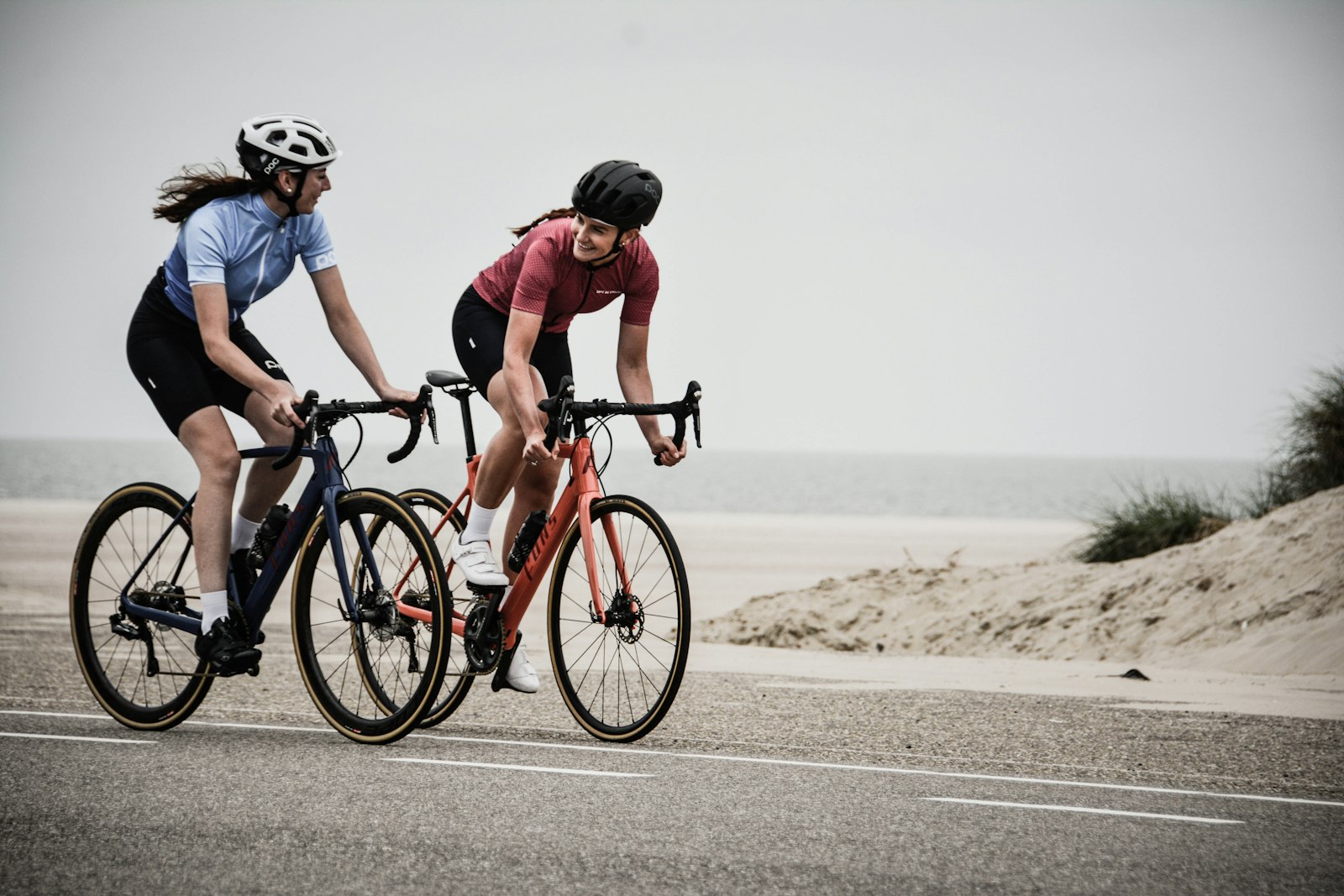
When a cyclist moves through still air, they punch a hole through it and leave a turbulent wake directly behind — a zone of swirling, low-pressure air. A following rider who enters this wake stops fighting undisturbed air and moves through a region of reduced pressure and eddies that actively push them forward. The lead rider has already done the work of breaking the air apart; the follower glides through the gap left behind.
This effect compounds massively in large groups. In a proper peloton, the wakes from dozens of riders overlap and reinforce each other, creating a huge sheltered bubble in the centre and rear of the group. Research led by Professor Bert Blocken — using wind tunnel testing with 121 3D-printed cyclists and CFD modelling with data from LottoNL-Jumbo and BMC Racing — found that riders at the mid-rear of a peloton experience just 5% of the aerodynamic drag of an isolated rider at the same speed. Previous studies had placed the maximum reduction at around 70%; the Blocken research revised that figure dramatically downward.
How much energy drafting actually saves
The practical impact on effort is significant. According to EF Pro Cycling: “If you ride behind another rider, so they break the wind for you, you can pedal the same speed as them and save up to half as much effort.” Wind tunnel measurements are even more specific: at 45 km/h, a rider sitting just 10 cm behind the wheel ahead saves 65% of the effort required to overcome aerodynamic drag. Physiological studies have measured VO₂ reductions of up to 62% when drafting at 40 km/h — meaning a rider’s cardiovascular system barely registers a pace that would obliterate them riding solo.
Why position in the group matters so much
Not every spot in a peloton is equal. Research published in the Journal of Wind Engineering and Industrial Aerodynamics shows that in groups of six to eight cyclists, the penultimate rider — second from last — experiences the greatest drag reduction, reaching 68%. Being last is actually slightly worse because that rider has no one behind to partially fill their own wake.
Roughly 5–7 riders back from the front is generally considered the ideal tactical position in a full peloton: deep enough in the sheltered bubble to conserve energy, close enough to the front to react to attacks or crashes. The very front riders are doing the work for everyone else — fully exposed to undisturbed air, burning substantially more energy per kilometre than those sheltered behind them.
How Pelotons Rotate: Sharing the Work Without Burning Out
Because riders at the front pay the full aerodynamic price while those behind ride nearly free, a well-organised group doesn’t stay static. It rotates — a continuous exchange where riders cycle from the sheltered rear to the exposed front and back again, distributing effort across the whole group so no single rider gets destroyed.
The rolling paceline: how riders take turns at the front
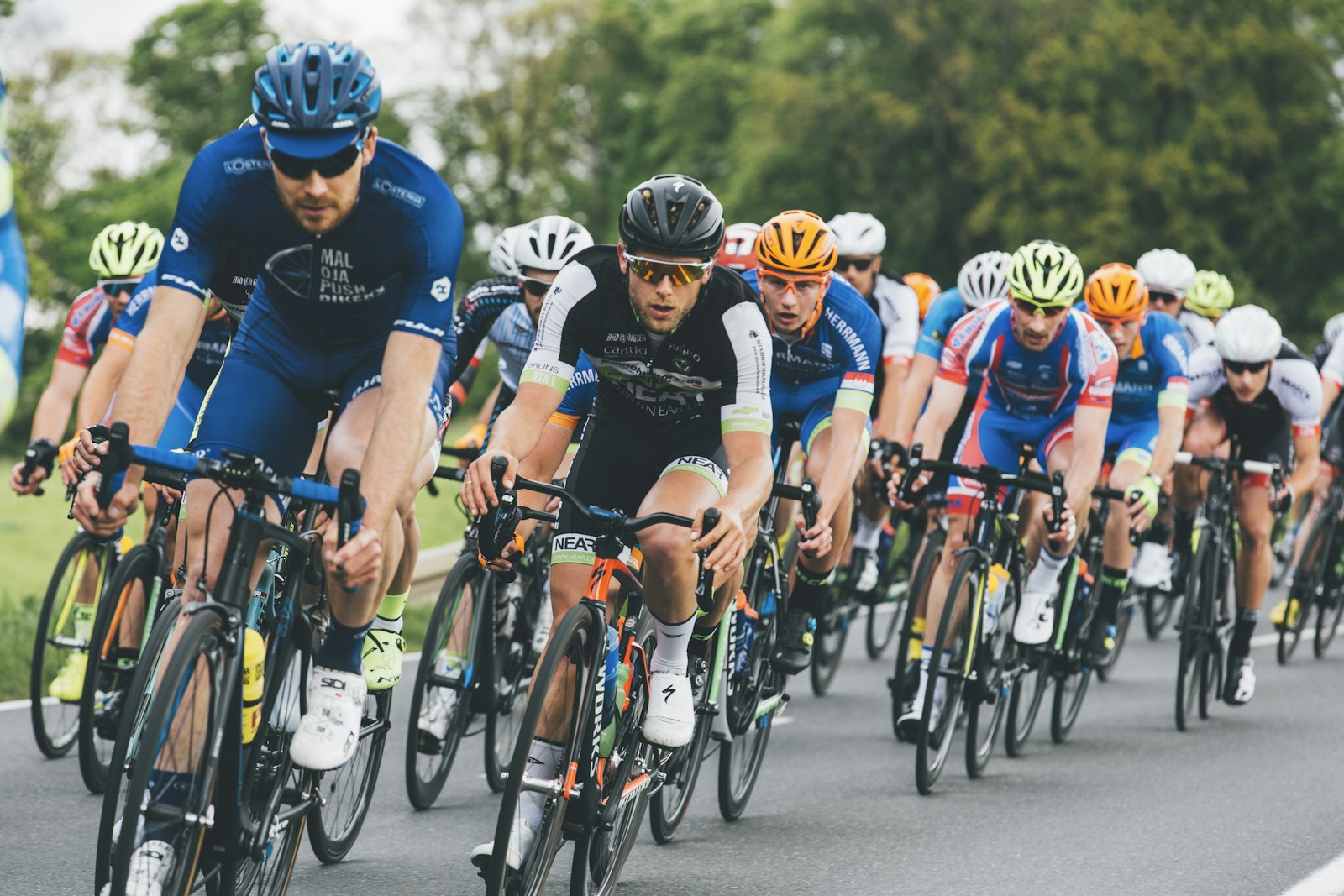
In an organised group — a breakaway, a team echelon, or a controlled peloton — riders take “pulls” at the front, holding the pace for a set distance (typically 0.5–2 km) before swinging to the side, drifting back to the rear, and slotting into the sheltered stream. The next rider slides forward and takes their turn. Done efficiently, this lets the group maintain a higher average speed than any individual could hold alone, because no single rider is forced to spend extended time fully exposed at the front.
Why domestiques do the heavy lifting for team leaders
In a Grand Tour, this rotation is deliberately unequal. Domestiques — the team workers — absorb the majority of frontline duty, shielding their team leader from wind exposure for as long as possible. A team leader sitting fifth or sixth wheel behind a train of domestiques is riding at a fraction of the effort of the riders pulling ahead. By the time the final climb or sprint arrives, the leader’s legs are measurably fresher than rivals who lacked such protection or whose teams were smaller.
The lead rider’s surprising benefit
The lead rider isn’t purely sacrificing themselves. When a follower tucks in close behind, their body partially fills the turbulent wake the leader creates — reducing the size of the low-pressure zone and, with it, some of the drag pulling backward on the leader. Wind tunnel data estimates the lead rider gains approximately 3% in aerodynamic efficiency from a close-following rider. Small in absolute terms, but over a 200 km stage, meaningful. This is why experienced riders don’t always sprint away when someone drafts off them — the cooperation has mutual benefit.
When the Draft Becomes a Weapon: Echelons, Crosswinds, and Attacks
Drafting is not just passive shelter — it is a tactical tool teams actively weaponise. The most dramatic application comes in crosswind stages, where the rules of peloton physics suddenly change and riders who understand echelon formation can destroy a race in minutes.
What is an echelon and why crosswinds create chaos
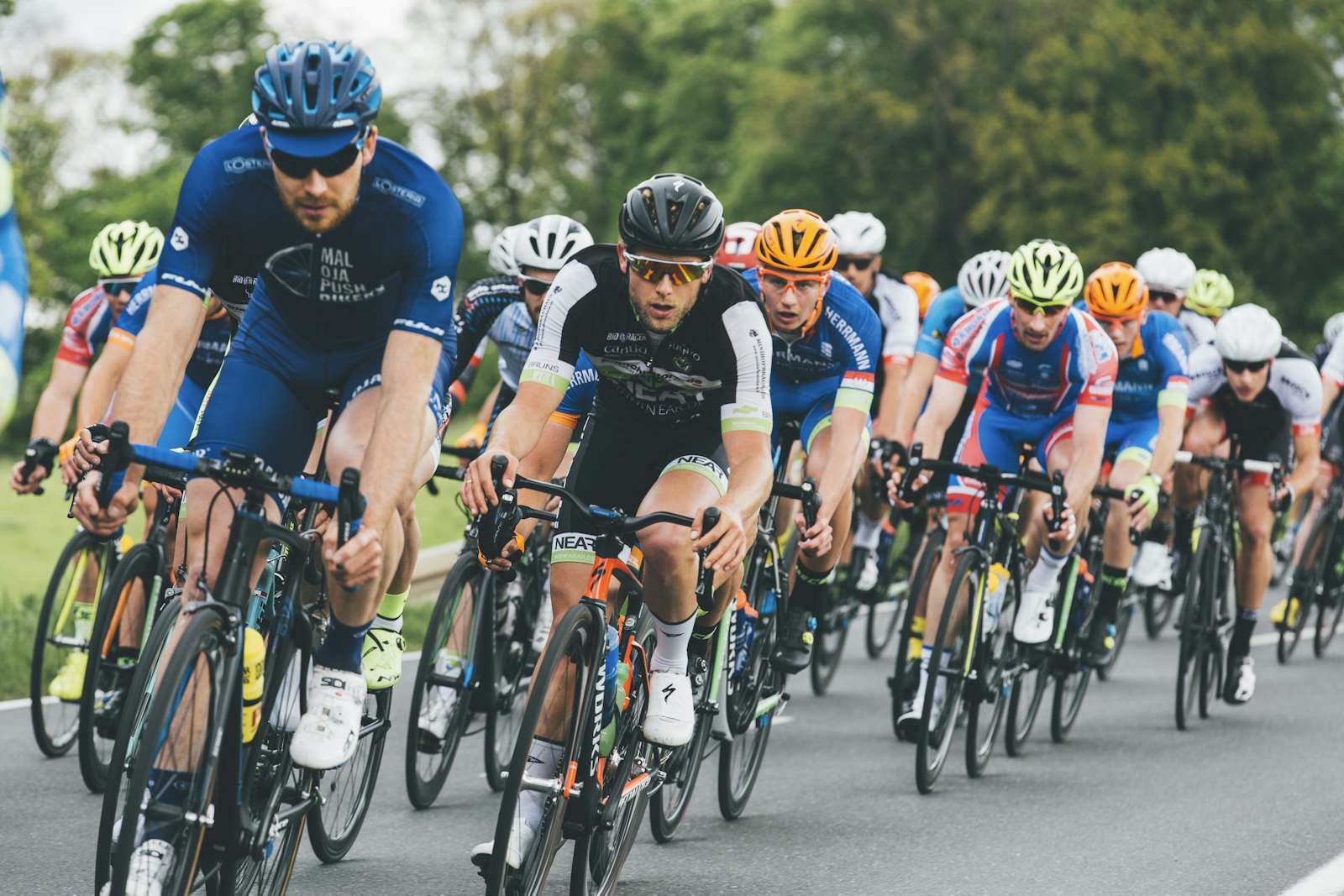
In a headwind, riders stack directly behind each other in a straight line. But when wind comes from the side, the draft shifts diagonally — and the shelter is no longer directly behind the rider ahead but slightly to the side. Riders must fan diagonally across the road to stay in each other’s protection, forming an angled line called an echelon. Research shows that the last rider in a four-rider echelon can experience up to 70% horizontal force reduction compared to riding solo into a crosswind.
The problem for pelotons: roads have finite width. Once an echelon fills the road, there is no more shelter to be found. Riders who cannot get into the echelon are left fully exposed on their own — and the gap to the sheltered group grows rapidly. This is how crosswind stages split pelotons and create Grand Tour time gaps worth minutes, not seconds.
Three race moments decided by drafting tactics
The tactical power of echelons has decided memorable stages in Tour de France history:
- 2020 Stage 7: The Vent d’Autan crosswind shattered the peloton across multiple echelons. Tadej Pogačar — caught behind a crash — could not regain the lead echelon and finished with the second group, losing 1 minute 21 seconds to race leader Adam Yates. Pogačar would go on to win that Tour overall — making the lost minute a remarkable footnote.
- 2016 Stage 11: Chris Froome, Peter Sagan, Fabian Cancellara, and Maciej Bodnar formed a decisive echelon in crosswind conditions, gaining 30 seconds on rivals who could not organise a counter.
- 2009 Stage 3: Lance Armstrong rode clear into the lead echelon while teammate Alberto Contador was caught in the second group — a 40-second gap that set the tone for one of cycling’s most-discussed team tensions.
How a breakaway group uses drafting to stay away
When riders escape the peloton in a breakaway, the same drafting physics now benefit the small group ahead. A breakaway of four or five riders that shares work smoothly can maintain a pace the peloton struggles to match — because the peloton’s size works against it when no single team wants to do all the chasing. Breakaway riders share the draft equally; the peloton is politically fragmented.
The breakaway’s survival depends on one thing above all: cooperation. Riders who refuse to take turns at the front — called “sitting on” or “wheelsucking” — break the rotation, slow the group’s speed, and virtually guarantee the peloton catches them before the finish.
The most surprising finding from aerodynamic research is not how much energy drafting saves — it’s how far the effect reaches. Measurable drag reductions have been recorded at 20 metres behind another rider. In a peloton of 170 cyclists, the physics of slipstreaming extend across the entire group, not just the riders immediately behind the front. Every rider in that dense formation is connected, invisibly, by the aerodynamics they share — and the single most powerful decision a directeur sportif makes before a sprint finish is ensuring their leader occupies the right place in that invisible chain.
Frequently Asked Questions
How much energy does drafting save in cycling?
Drafting can save 25–65% of the energy required to overcome aerodynamic drag, depending on speed and proximity. At 45 km/h, sitting just 10 cm behind another rider saves approximately 65% of drag effort. In the mid-rear of a full peloton, riders experience as little as 5% of the drag of a solo rider at the same speed.
What is an echelon in cycling?
An echelon is a diagonal formation riders adopt in crosswind conditions, where each rider positions slightly to the side of the rider ahead to stay in the shifted draft. Echelons spread across the road, and riders who cannot fit into the echelon are left fully exposed — which is how crosswind stages create large time gaps in Grand Tour races.
Does the rider at the front of a peloton benefit from drafting at all?
Yes, slightly. When a rider follows closely, they partially fill the turbulent wake behind the leader, reducing drag on that lead rider by an estimated 3%. It is a small benefit, but it is why even frontrunners can prefer riding with company over riding alone.
Does drafting work uphill in cycling?
Yes, though the benefit is reduced compared to flat terrain. Research shows drafting on a 7.5% gradient saves over 7% in required power, and at higher climbing speeds savings can exceed 12%. The slower speeds on steep climbs reduce the aerodynamic component, so gravity becomes the dominant factor.
What is “wheelsucking” in cycling?
Wheelsucking is when a rider benefits from another rider’s draft without taking any turns at the front. In a breakaway, a wheelsucker conserves energy while others do the work — then attacks or sprints at the end. It is legal but considered poor etiquette and often triggers retaliation from rivals.