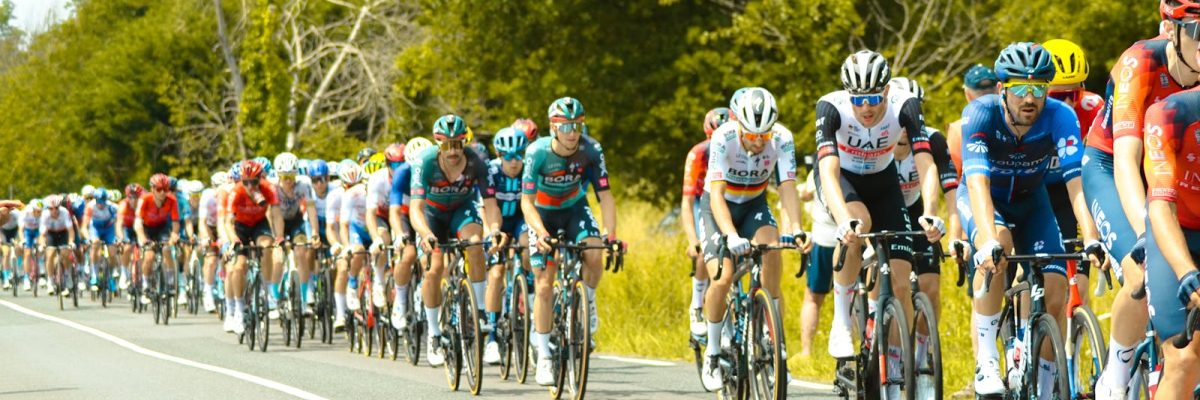
Behind every Tour de France champion, there are seven riders whose names rarely appear on podiums but whose legs make the victory possible. They are called domestiques — French for “servants” — and they are the engine room of every professional cycling team. Their job is not to win. Their job is to make sure someone else does. Understanding the domestique is the single most important step toward understanding how road cycling actually works, because without them, even the strongest rider in the world cannot survive three weeks in the Alps and Pyrenees.
- A domestique is a professional cyclist whose primary role is to support a team leader rather than compete for personal victories.
- Duties include riding at the front to block wind, ferrying water and food from the team car, chasing down breakaways, and surrendering their bike if the leader suffers a mechanical failure.
- Drafting behind a single rider saves roughly 30% of aerodynamic drag; riding in the middle of a large group can reduce drag by up to 95%.
- UCI WorldTour minimum salaries for 2025 stand at €44,150 for experienced riders, while top domestiques on leading teams earn €200,000–€400,000.
- Multiple Tour de France champions — including Greg LeMond, Jan Ullrich, Chris Froome, and Jonas Vingegaard — spent at least one major race working as domestiques before winning the Tour themselves.
What a Domestique Actually Does on Race Day
A typical Tour de France stage lasts five to seven hours. For a domestique, almost every minute of that time is spent working for someone else. The specific tasks vary by stage type — flat, mountain, or time trial — but the core principle never changes: the leader conserves energy while the domestique expends it.
Riding at the Front to Break the Wind
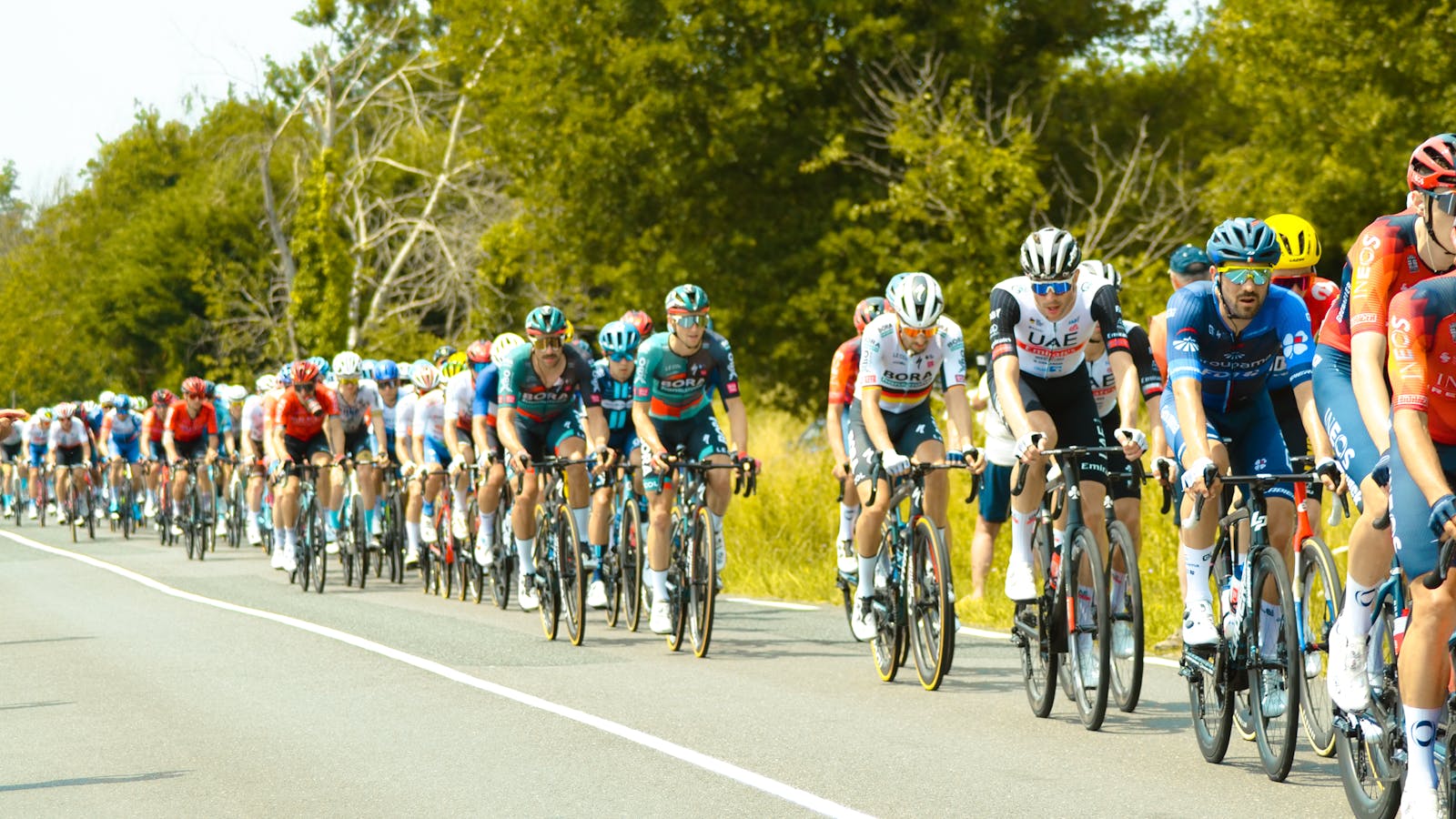
On flat stages and in the final kilometers of sprint stages, domestiques ride at the front of the peloton — or just ahead of their team leader — to create a slipstream. This is not a minor advantage. At racing speeds of 45–50 km/h on flat terrain, approximately 80% of a cyclist’s effort goes purely toward fighting air resistance, according to research compiled by The Exploratorium’s Science of Cycling. A single domestique riding in front reduces that burden significantly; a line of five or six domestiques creates a shelter that allows the leader to coast in relative comfort before attacking at the critical moment.
This is why teams “control” a race from the front, setting the peloton’s pace and deciding who gets to break away — and who doesn’t. A domestique surges ahead to neutralize an early escape; when the group catches up, another domestique immediately surges again. The cumulative effect exhausts rival teams while leaving the protected leader fresh.
Water Carrier, Food Fetcher, and Mechanical Guardian
On long mountain stages, domestiques make repeated trips to the team car — which follows the race convoy at the rear of the peloton — to collect water bottles and food. They load themselves with as many bidons (cycling water bottles) as they can carry — stuffed in jersey pockets, tucked in shorts — then ride back through the peloton distributing them. Over 21 Tour stages, roughly 46,000 bidons are consumed by all 176 riders, a significant portion of which are carried by domestiques in exactly this fashion.
On a hot day in the Alps, where temperatures reach 35°C and riders sweat approximately 1.5 liters per hour, a single rider can drain 10–15 bottles over a long climb. Without domestiques making repeated supply runs, leaders would either dehydrate or lose minutes stopping at feed stations themselves.
The mechanical guardian role is perhaps the most dramatic. If the team leader suffers a puncture or a mechanical failure at a crucial moment, a domestique immediately stops, hands over their own bike, and waits for a spare from the team car. The domestique’s race is effectively over; the leader continues without losing time.
Tactical Blocking and Peloton Control
Domestiques also perform a subtler defensive function: blocking. When a rival team attempts to accelerate or send riders into a breakaway, domestiques position themselves across the road to slow the response, buying the leader time to react. On mountain climbs, they set a brutal tempo at the front that shreds weaker riders out of the group — a tactic known as “riding for time” — before stepping aside for the leader to attack in the final kilometers.
Since the 1990s, earpiece radio communication has connected team directeurs sportifs in the following cars to every rider on the road, allowing real-time tactical instructions. A domestique may be redirected mid-stage: abandon your climb attempt, drop back to pace the leader up, cover that breakaway, protect the green jersey at the sprint point.
Wind, Watts, and Sacrifice: The Physics of Team Support
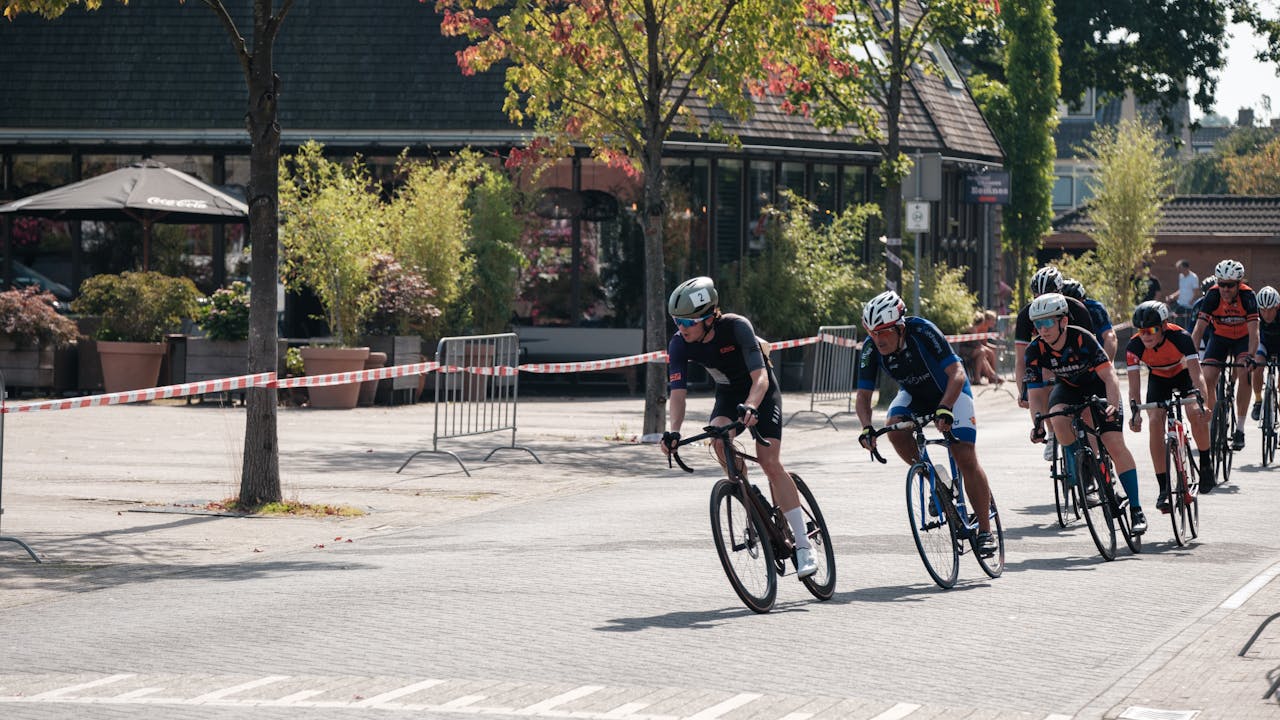
The reason domestiques are so valuable is rooted in physics. Professional cycling at race speed is primarily a battle against aerodynamic drag — and the rider who fights that drag pays for it in watts and fatigue. Domestiques absorb that cost so their leaders don’t have to.
How Drafting Saves Energy
Riding directly behind another cyclist — drafting or slipstreaming — exploits the low-pressure zone the lead rider creates as they punch through the air. At typical Tour de France peloton speeds, a rider drafting directly behind one other cyclist saves roughly 30% of aerodynamic drag. In the middle of a large, well-organized group, that saving can reach 95%, according to aerodynamics research cited by The Exploratorium. A rider solo at high speed burns 40–50% more energy than the same rider tucked in behind a domestique line.
This is why the Tour de France general classification is won not just through individual strength but through team organization. A rider with eight strong domestiques can arrive at the final mountain pass significantly fresher than an equally-talented rider who spent the day fighting the wind alone.
The Energy Budget of a Stage Race
Tour de France riders burn up to 7,000 calories per day during racing. Over 21 stages, the entire peloton of 176 riders consumes an estimated 69,000 energy bars and 69,000 gels, much of it delivered mid-stage by domestiques making food runs. A domestique carrying out full duties — riding at the front for hours, making multiple supply runs, chasing breaks — typically burns more energy in a given stage than the leader they’re protecting, yet finishes further down the results sheet.
The Human Cost: Sacrifice as Professional Obligation
The term “domestique” was first applied in anger. In 1911, French rider Maurice Brocco offered his services for hire to other riders during the Tour de France — a practice race organizer Henri Desgrange found so objectionable that he called Brocco a “domestique” as an insult. Brocco responded by winning the next stage by 34 minutes to prove that his sacrifice was a choice, not a limitation.
Modern domestiques sign contracts explicitly structured around support roles. A rider who might win a smaller stage race on their own will instead spend three weeks serving a more valuable teammate. UCI WorldTour minimum salaries for experienced riders in 2025 stand at €44,150 gross annually, according to Velora Cycling, though top domestiques on leading teams earn considerably more — typically €200,000–€400,000 — reflecting the genuine difficulty and value of their role.
From Domestique to Champion: A Common Career Path
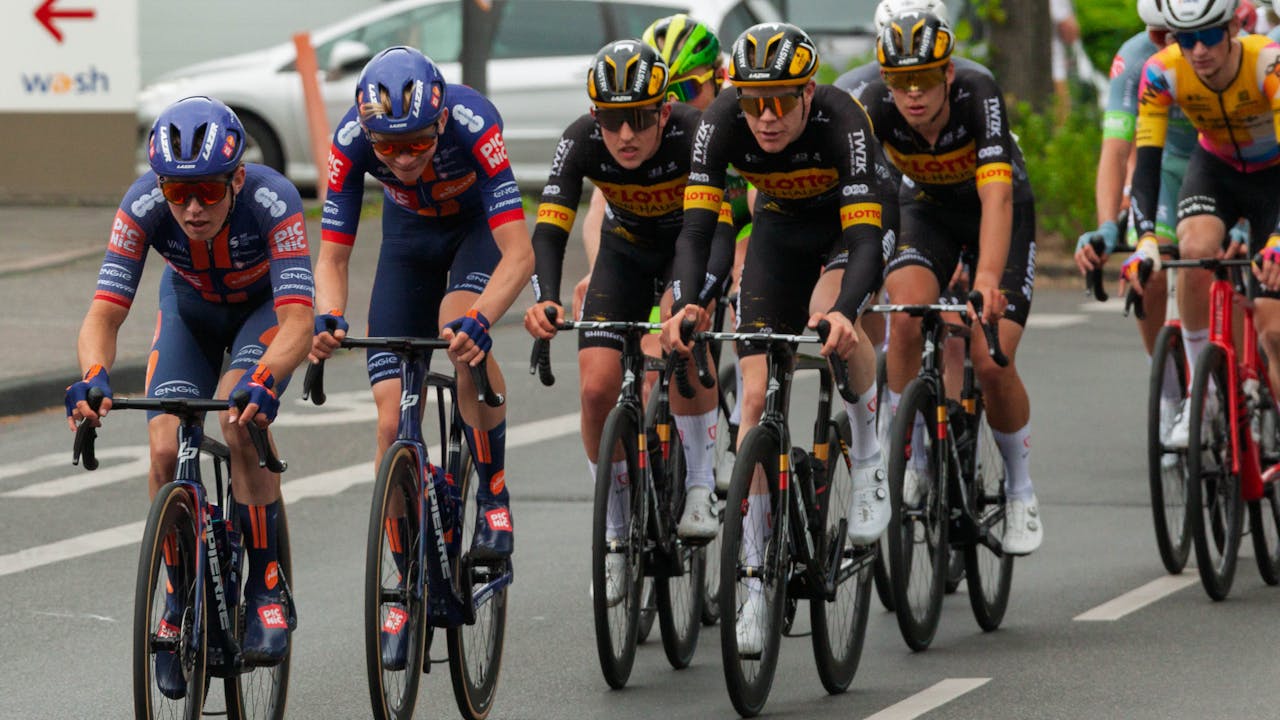
The most striking fact about domestiques is how frequently they become champions. The skills required to read a race tactically, manage energy over three weeks, and understand team dynamics are precisely the skills that distinguish great Tour de France winners from merely strong climbers. Serving as a domestique is, for many riders, the best education in professional racing that exists.
Greg LeMond, Jan Ullrich, and the Pattern
American rider Greg LeMond worked as a domestique for French legend Bernard Hinault during the 1985 Tour de France, supporting Hinault’s fifth victory despite being arguably the stronger climber on the team. The following year, with the teams’ roles reversed, LeMond won his first of three Tour titles. Jan Ullrich followed the same arc: he spent the 1996 Tour in service of Bjarne Riis, then won the 1997 Tour himself.
Chris Froome and Jonas Vingegaard
Chris Froome provides the most analyzed domestique transition in modern cycling. During Stage 17 of the 2012 Tour de France — on the Peyragudes climb — Froome visibly waited for team leader Bradley Wiggins three times despite having superior climbing form, allowing Wiggins to take the yellow jersey and the overall win. One year later, in 2013, Froome won the Tour himself.
Jonas Vingegaard worked as a support rider for Primož Roglič at the 2020 Vuelta a España, one of cycling’s three Grand Tours, then won back-to-back Tour de France titles in 2022 and 2023. The pattern is not coincidence: grand tour racing rewards the kind of patience, tactical intelligence, and energy management that a domestique develops by spending years subordinating their own instincts to the team’s needs.
Why Some Domestiques Stay Domestiques
Not every domestique becomes a leader, and many talented riders make a long, well-paid career of the support role without ever attempting to win a Grand Tour. Tim Declercq, Luke Rowe, and Michael Schär — ranked among the best domestiques in professional cycling in a 2020 poll — built reputations specifically on their reliability and selflessness rather than their personal results. For them, the role is not a stepping stone but a professional identity, and the teams that win major races depend entirely on riders willing to fill it.
The most counterintuitive truth in professional cycling is that the strongest team wins more often than the strongest individual — and the strongest team is usually the one with the best domestiques.
Frequently Asked Questions
How many domestiques does a Tour de France team have?
Each Tour de France team fields 8 riders. In a typical GC team, 5–6 of those riders are domestiques supporting 1–2 protected leaders. Sprint teams may structure differently, with multiple lead-out riders serving a designated sprinter.
Can a domestique win a stage of the Tour de France?
Yes — and it happens regularly. Team directors sometimes allow a domestique to attempt a stage win when it doesn’t conflict with the team’s overall objectives. A domestique in a breakaway with no threat to the GC leader may be permitted to race for the stage.
What is a super-domestique?
A super-domestique is a rider skilled enough to lead their own team in smaller races but who works in a support role at major events. They are typically the last domestique standing on a mountain stage, riding alongside the leader through the final kilometers.
What happens if a domestique abandons a race?
If a domestique cannot continue — due to injury, illness, or exhaustion — the team continues with fewer riders. There is no replacement. Teams strategically pace domestiques through the early stages to preserve them for when they’re needed most, typically in the final mountain stages.
How is a domestique different from a rouleur or a puncheur?
Rouleur and puncheur describe riding styles; domestique describes a race role. A rouleur (powerful all-rounder) or a puncheur (explosive on short climbs) can both serve as domestiques. The domestique role is about function within the team, not physical type.